
The secret of smart food combinations & the intelligence of our meals
Michaela Altenberger,
Have you ever wondered why some meals make you feel noticeably stronger, more alert, and more balanced—while others have little effect? Why do potatoes and eggs have a greater effect on the body when eaten together than when eaten separately? And what does all this have to do with the secret interaction of our nutrients?
It's amazing how finely tuned our bodies are in their communication with food—
how certain foods reinforce each other, as if they had agreed to work together to achieve their effect.
This synergy is called bioavailability:
it describes how well nutrients from food actually reach our cells.
Because what we eat is not automatically what our bodies can use.
What bioavailability really means
Bioavailability is the proportion of a nutrient that reaches the bloodstream after digestion and can be used by the metabolism.
It depends on many factors:
- Type of nutrients (e.g., plant-based vs. animal-based iron)
- Accompanying substances in food (e.g., vitamin C improves iron absorption, phytic acid inhibits it)
- Method of preparation (e.g., cooking, fermentation, pureeing)
- Combination of foods
Increased bioavailability therefore means that more of the nutrients absorbed actually reach their destinations—the brain, muscles, and cells.
Biological value shows how well our body can convert ingested protein into the body's own protein.
The more complete the amino acid pattern, the higher the value – and the better the availability.
There are around 20 amino acids in the human body, ten of which are essential – eight cannot be produced by the body itself, and two only to a limited extent.
A complete protein contains all essential amino acids in sufficient quantities.
If one of these is missing or only present in small amounts, it limits protein formation – this is called the limiting amino acid.
This is exactly where cleverly combined foods come into play:
Lentils with rice or potatoes with eggs compensate for this deficit – and significantly increase the biological value.
The silent power of plant proteins
Plant-based foods rarely contain all essential amino acids in optimal proportions.
But when combined wisely, they create a complete amino acid profile—
and thus a source of protein that is in no way inferior to animal products.
Some tried-and-tested combinations that have long been part of our home cooking:
- Lentils & rice – a classic combination in Asia: lysine from lentils complements methionine from rice.
- Chickpeas & quinoa – quinoa provides all nine essential amino acids, while chickpeas increase the total protein content and fiber.
- Corn & beans – a Central American staple with a perfect amino acid balance.
- Cereals & dairy products – such as oatmeal with yogurt or quark.
- Potatoes & eggs – one of the most biologically valuable combinations of all.
Why? Chicken eggs serve as a reference with a biological value of 100.
Potatoes & eggs together achieve a value of around 136 – meaning even more efficient protein utilization.
Well-known everyday examples of high nutrient synergy
- Farmer's breakfast – potatoes with eggs: perfectly combined proteins, long-lasting satiety.
- Spätzle with lentils – a classic dish from southern Germany, scientifically sound.
- Baked potato with sour cream – starch meets milk protein, promotes muscle building and cell repair.
- Chili con carne – beans and corn complement each other to form a complete plant-based and animal-based protein source.
- Spanish frittata – eggs and potatoes, a quiet powerhouse in Mediterranean form.
- Spinach & citrus fruits – vitamin C from oranges or lemons makes plant-based iron truly available.
- Tomatoes & avocado – Lycopene, the red antioxidant, needs fat – avocado provides it in the best form.
- Yogurt & berries – Calcium meets antioxidants: cell protection and bone metabolism in harmony.
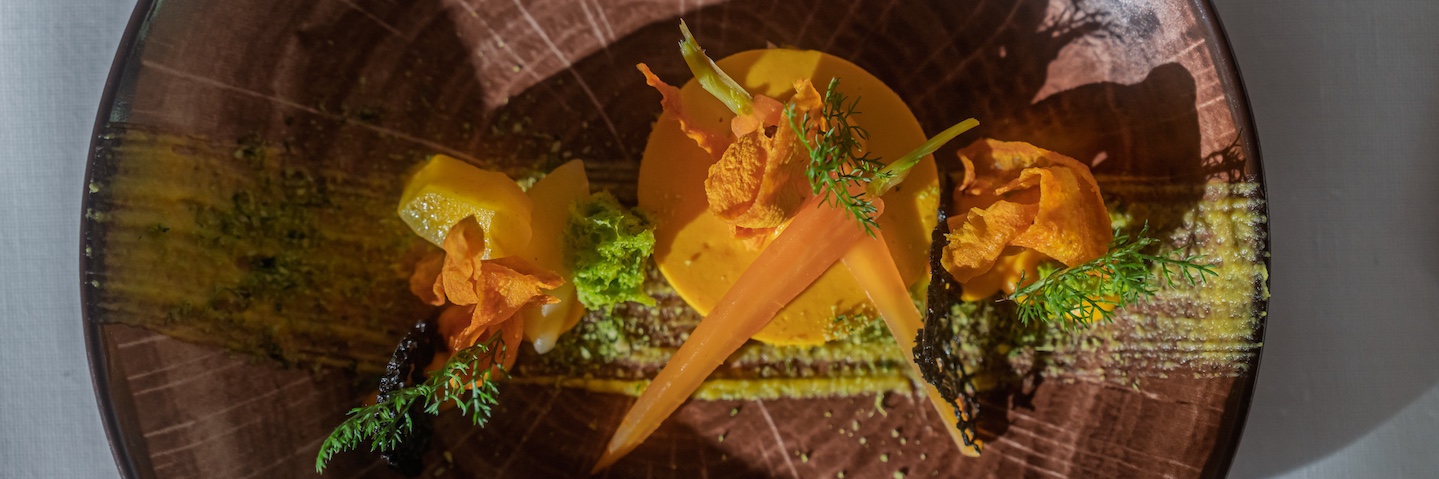
- Carrots & hummus – Beta-carotene is fat-soluble, and the olive oil in hummus helps convert it into vitamin A.
- Salmon & mushrooms – Omega-3 fatty acids and vitamin D work together to fight inflammation.
- Almond butter & apples – Vitamin E from almonds is stabilized by vitamin C from apples – a powerful duo against oxidative stress.
Smart snacks with high nutrient density
Even small meals can have a big impact—if they're based on the right combination of ingredients.
Rice pudding with nuts or seeds
Milk provides high-quality protein and calcium, while rice provides long-lasting energy.
Adding a little almond butter, sesame seeds, or flax seeds to the rice pudding increases the content of healthy fats, magnesium, and vitamin E, and thus also the absorption of fat-soluble vitamins.
Whole grain bread with peanut butter or hummus
Here, grain and legume proteins complement each other perfectly:
The bread provides methionine, the peanuts or chickpeas provide lysine – together they create a complete plant-based protein source.
At the same time, the fats they contain promote the absorption of fat-soluble vitamins such as A, D, E, and K.
The formula behind healthy eating
Bioavailability is not complicated science—
it is a subtle understanding of connections.
You could say it is the language in which food speaks to our bodies.
Those who understand it do not learn to eat more—they learn to eat smarter.
A squeeze of lemon, a spoonful of mustard, a little fat—
it's often the small details that turn a meal into a biological masterpiece.

Get in touch
Pick your communication channel of
choice - the Krallerhof team is
happy to help you!
 urlaub@krallerhof.com
 +43 6583 8246
 Inquiry
 Booking
 Fb Messenger
 Voucher