
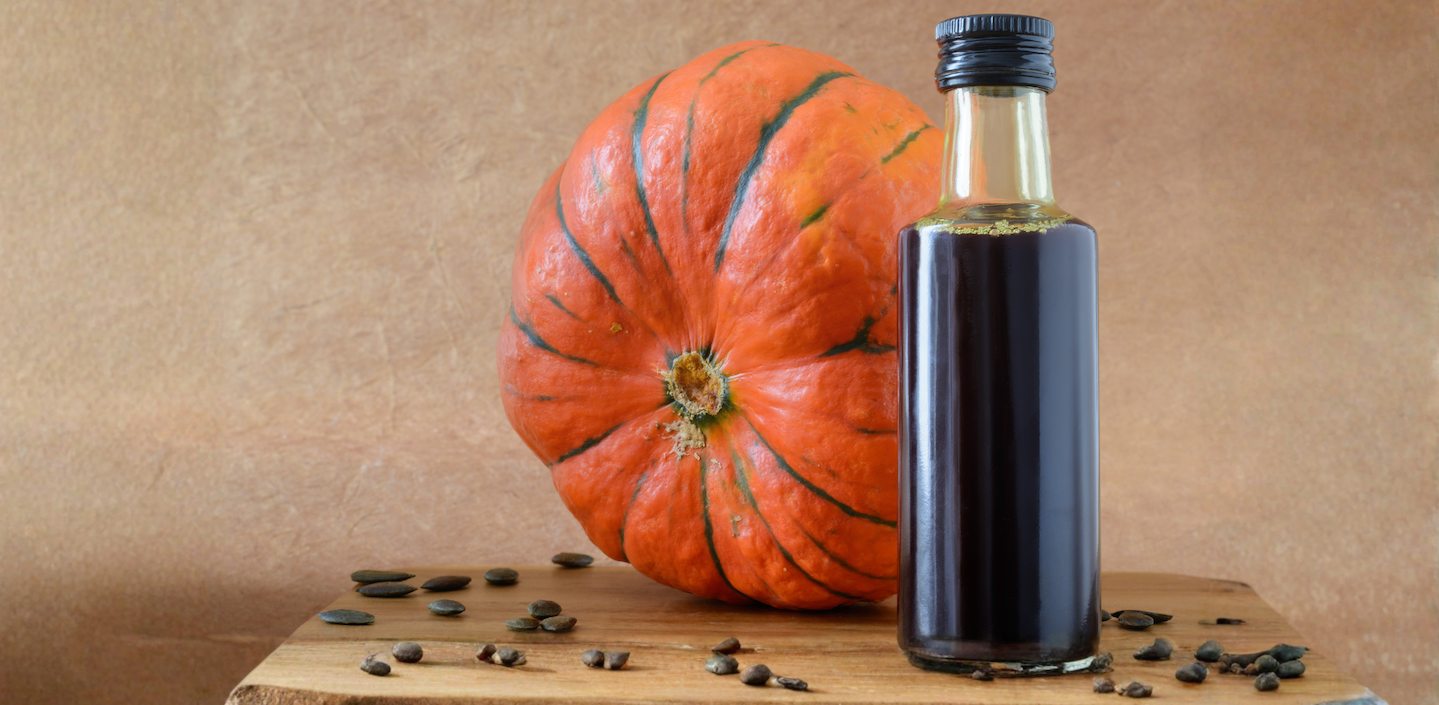
The Green Secret: What Pumpkin Seed Oil Does to Your Brain
Michaela Altenberger,
It smells like roasted nuts and, somehow, like autumn. Dark green, almost black, it drips slowly from the spoon—and anyone pouring it over a salad for the first time thinks: This can’t be ordinary oil. And it isn’t.
Pumpkin seed oil is one of those foods that people have known for generations yet still barely understand. The people of Styria swear by it, grandmothers used it for all sorts of ailments, and neuroscience is only just beginning to understand why they weren’t so far off the mark.
The gut-brain axis runs on tryptophan
This is where things get interesting for anyone who views neuro-longevity not as a buzzword, but as a life strategy. Pumpkin seed oil contains tryptophan—an essential amino acid that the body cannot produce on its own. Tryptophan is the precursor to serotonin. Serotonin is the precursor to melatonin.
It sounds like a simple chain. But it isn’t, because the crucial step happens in the gut: About 90% of the body’s serotonin is produced there—not in the brain. The gut isn’t just a digestive machine; it’s a communication organ. And what you feed it helps determine what reaches the brain.
So, anyone who regularly consumes tryptophan through their diet is not only feeding their stomach but also supporting neurotransmitter production, sleep quality, and emotional regulation. Pumpkin seed oil isn’t a miracle cure, but it’s a smart, consistent contribution.
Zinc: The Underestimated Neurotransmitter Mineral
Zinc is commonly regarded as an immune booster that people pick up at the pharmacy when they have a cold. What hardly anyone knows: Zinc is essential for the function of over 300 enzymes in the body and plays a direct role in the brain.
It is involved in the synthesis of GABA, the nervous system’s most important inhibitory neurotransmitter. People with low GABA levels sleep poorly, react with excessive agitation, and cannot find peace. Zinc also regulates NMDA receptors, which are responsible for learning processes and memory consolidation.
Pumpkin seed oil contains bioavailable zinc. Not in pharmaceutical doses, but in a form that the body absorbs with a meal without straining the digestive tract. That is the difference between supplementation and nutrition.
Cucurbitin: The Compound Almost No One Knows About
Cucurbitin, an unusual amino acid found almost exclusively in cucurbit plants, is present in pumpkin seeds and, consequently, in pumpkin seed oil. For centuries, it has been used in folk medicine to treat parasites—simultaneously in Europe, Asia, and the Middle East, without any knowledge of each other’s practices.
Modern research is taking a fresh look at cucurbitin in the context of gut health. A healthy gut microbiome isn’t just a nice bonus for health—it’s a prerequisite for cognitive clarity, emotional stability, and a functioning immune system. What protects the gut protects the brain. It’s that straightforward.
Phytosterols and the silent hormone game
Phytosterols have a structural similarity to cholesterol and compete for the same absorption pathways in the gut. The result: they reduce cholesterol absorption. What is less well known: phytosterols also have a moderate modulating effect on the endocrine system.
This explains why pumpkin seed oil has traditionally been recommended for prostate issues—and why current studies are also investigating its effects in women during perimenopause. The oil does not aggressively interfere with hormonal balance. It makes subtle adjustments. Sometimes that is exactly the wisest approach.
The Styrian Terroir: Not Romantic, but Scientifically Significant
Styrian pumpkin seed oil has a Protected Geographical Indication—not as a marketing gimmick, but because the soil, climate, and the pumpkin variety used (Cucurbita pepo var. styriaca, a shell-less variety found only here) actually influence the oil’s composition.
Styrian soil is rich in minerals, and the climate is temperate with warm summers. This measurably influences the phytosterol and fatty acid content. Terroir is not wine jargon. It is biochemistry.
How to really use it
Cold. Always cold. Or only after cooking. This isn’t a recommendation; it’s chemistry: At around 100 degrees, the unsaturated fatty acids begin to oxidize—the healthy oil becomes a carrier of free radicals. It could hardly be more counterproductive.
A teaspoon over yogurt in the morning. Over pumpkin soup just before serving. On toasted sourdough bread with a little Fleur de Sel. Over vanilla ice cream, very popular in Styria. Or the classic Styrian recipe: potatoes, apple cider vinegar, pumpkin seed oil, chives—and there you have a dish that delivers more nutrients than many a supplement shelf.
Pumpkin seed oil isn’t just a fad. It’s a food with a long history—and science is now confirming what generations have intuitively known. Dark green, intense, distinctive. Just the thing for anyone who takes their brain as seriously as their palate.
Get in touch
Pick your communication channel of
choice - the Krallerhof team is
happy to help you!
 urlaub@krallerhof.com
 +43 6583 8246
 Inquiry
 Booking
 Fb Messenger
 Voucher